
Dental Crowns in Mesa, AZ

Restore Strength, Function, and Confidence to Your Smile
A damaged or weakened tooth can make chewing uncomfortable and increase the risk of further damage. A dental crown is a custom-made restoration that covers the visible portion of the tooth to rebuild its shape, strength, and appearance. Crowns may be recommended for extensive decay, cracks, wear, large fillings, or root canal therapy.
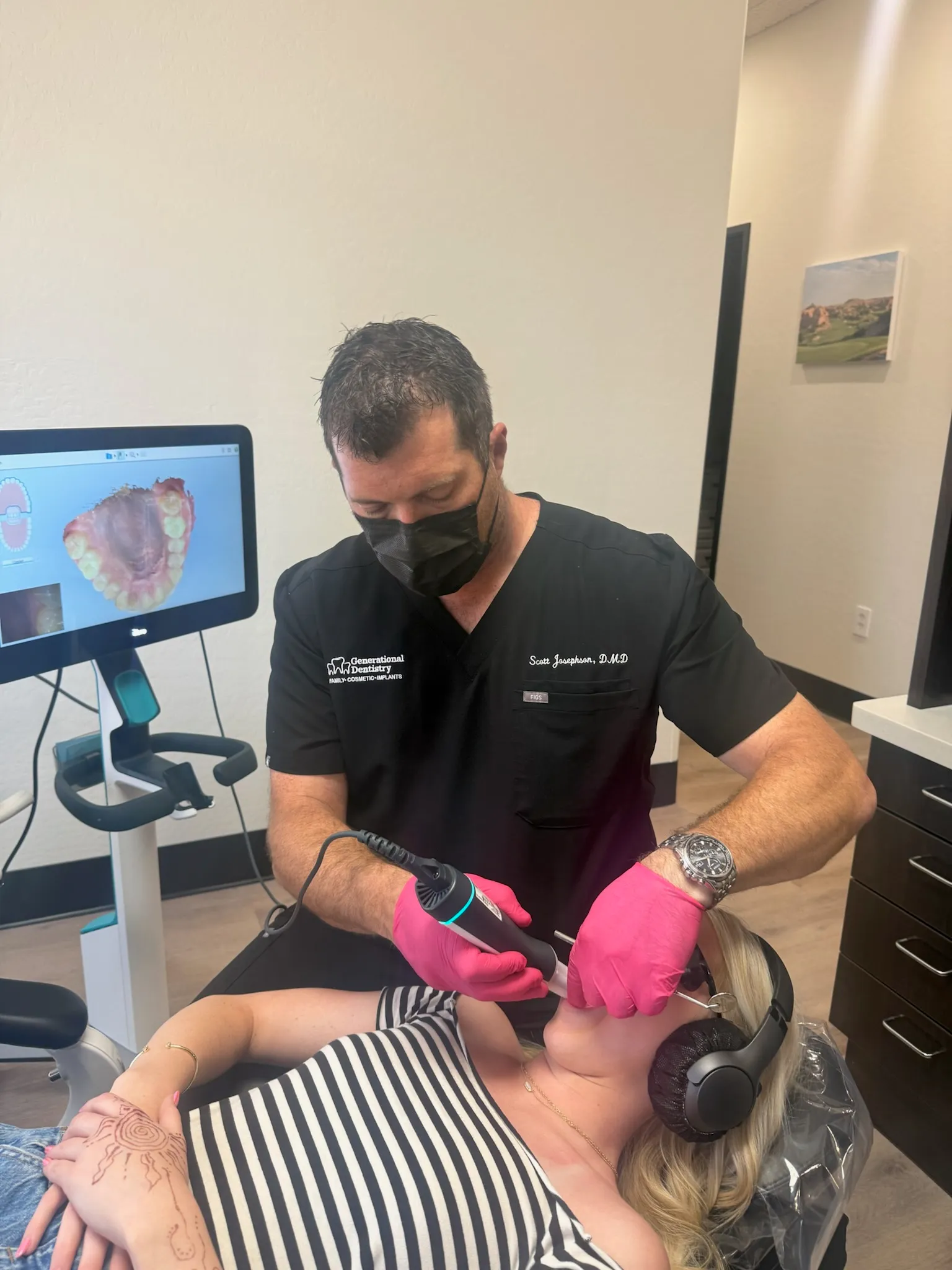
At Generational Dentistry, we provide custom dental crowns in Mesa, AZ, through a thoughtful, patient-centered approach. Dr. Scott Josephson evaluates the tooth, bite, gums, and overall oral health, explains your options, and answers questions without pressure.
What Is a Dental Crown?
A tooth crown, also called a dental crown, is a custom-made cap that fits over a prepared natural tooth. Unlike a filling, which rebuilds a portion of the tooth, a crown surrounds the visible tooth structure above the gumline. This support can help a weakened tooth withstand everyday biting and chewing forces.
The dentist designs each tooth restoration around the affected tooth’s size, shape, color, position, and relationship with your bite. Although crowns are primarily used in restorative dentistry, they can also improve appearance by rebuilding worn or misshapen teeth, covering severe discoloration, and creating a more balanced tooth shape.

Advanced Care with a Gentle Touch
We invest in the latest dental technology to provide you with more comfortable, efficient, and precise treatments.
Why Might You Need a Dental Crown?
The dentist may recommend a crown when the remaining tooth structure cannot reliably support a filling or when the tooth requires broader protection.
Common reasons include:
- A cracked tooth: A crown can hold the remaining structure together and distribute chewing pressure across the tooth. Whether cracked tooth repair is possible depends on the location and depth of the crack.
- Severe decay: When decay affects a large portion of the tooth, a filling may not provide enough reinforcement.
- A large filling: Teeth with extensive or failing fillings may have thin walls that are more likely to fracture.
- Worn teeth: Grinding, clenching, bite problems, or years of use can gradually shorten or weaken teeth.
- Root canal therapy: A tooth that has lost substantial structure may need a crown after root canal treatment, particularly a back tooth exposed to strong chewing forces.
- Dental trauma: A broken or chipped tooth may need a crown when bonding cannot reliably rebuild it.
- Cosmetic concerns: Crowns can improve the color, proportion, or shape of damaged teeth when less extensive cosmetic dentistry options are unsuitable.
- Dental bridges or implants: Crowns may support a dental bridge or attach to a dental implant to replace a missing tooth.
Not every damaged tooth needs a crown. Dr. Josephson will explain whether a filling, bonding, veneer, crown, or another form of care is best suited to the tooth’s condition and your goals.
What Types of Dental Crowns Are Available?
Crowns can be made from several materials. No single material is right for every tooth. Selection depends on the tooth’s location, visible appearance, biting forces, available space, existing dental work, and the patient’s preferences.
Porcelain Crowns
Porcelain crowns offer a translucent appearance that can resemble natural enamel. Their color can be selected to coordinate with nearby teeth, making them a common consideration for visible areas of the smile.
Ceramic Dental Crowns
Ceramic dental crowns are tooth-colored and do not contain metal. Different ceramic materials provide varying levels of translucency and strength. The dentist considers both appearance and function when deciding whether a ceramic crown may be suitable.
Zirconia Crowns
Zirconia is a strong type of dental ceramic that can withstand substantial chewing pressure. It may be considered for back teeth or other areas where durability is a priority. Its appearance depends on the type and design selected.
Porcelain-Fused-to-Metal Crowns
Porcelain-fused-to-metal crowns combine a metal base with a tooth-colored porcelain surface. The metal provides support, while the outer layer creates a more natural appearance. In some cases, a dark line may eventually become visible near the gumline.
Metal Crowns
Metal crowns may be made from gold-containing alloys or other dental metals. They are highly durable and require less tooth reduction in some situations, but their metallic color makes them more noticeable. They are generally considered for areas where appearance is less important.
During your consultation, Dr. Josephson will discuss the materials available for your case and explain the advantages and limitations of each option.

What Are the Benefits of Dental Crowns?
Dental crowns can provide several functional and cosmetic benefits:
- Restore comfortable biting and chewing
- Protect weakened or cracked teeth
- Preserve natural tooth structure that might otherwise continue to break down
- Rebuild the size and shape of worn or broken teeth
- Improve the appearance of discolored or misshapen teeth
- Support a dental bridge
- Complete a dental implant restoration
- Provide durable support for everyday function
How Do You Care for a Dental Crown?
A crowned tooth still needs daily care because plaque can collect where the crown meets the natural tooth. To care for your crown:
- Brush twice daily with fluoride toothpaste.
- Floss around the crowned tooth every day.
- Attend routine examinations and professional cleanings.
- Avoid chewing ice, hard candy, popcorn kernels, and other hard objects.
- Never use your teeth to open packages.
- Ask about a nightguard if you grind or clench.
- Contact the office if the crown feels loose, painful, uneven, or different when you bite.
Crowns commonly last five to 15 years. Material, bite, oral hygiene, grinding habits, and wear can influence longevity and replacement timing.
What Happens During the Dental Crown Process?
Receiving a traditional custom crown usually involves more than one appointment because the final restoration is created to fit the prepared tooth and surrounding bite.
Initial Consultation
Dr. Josephson examines the tooth and may take digital X-rays to assess the roots, bone, decay, and remaining structure. He also reviews your symptoms, dental history, and goals. If the tooth needs root canal therapy or other care before receiving a crown, the team will explain the recommended sequence.
Tooth Preparation
The tooth is numbed for comfort. The dentist cleans away decay or compromised material and reshapes the tooth to make room for the crown. If much of the structure is missing, a buildup may be placed to support the restoration.
Impressions or Digital Scans
An impression or digital scan records the prepared tooth, the surrounding teeth, and the bite. These records guide the creation of a crown that fits securely and supports a comfortable bite.
Temporary Crown
A temporary crown protects the prepared tooth while the final crown is being made. It may not feel or look exactly like the finished restoration, so patients should avoid sticky or very hard foods that could loosen or damage it.
Final Crown Placement
At the final appointment, the temporary crown is taken off, and the custom crown is evaluated. Dr. Josephson checks the fit, shape, color, and contact with neighboring teeth. He also checks the bite and makes adjustments as needed before securely bonding the crown in place.

Frequently Asked Questions About Dental Crowns
Is receiving a dental crown painful?
The tooth is numbed during preparation, so you should not feel sharp pain during the procedure. Mild gum tenderness or sensitivity may occur afterward and usually settles. Contact the office if discomfort becomes severe, persists, or interferes with sleep.
How long does it take to receive a crown?
A traditional crown generally requires two appointments. During the first visit, the dentist prepares the tooth, records an impression or a scan, and places a temporary crown. The custom crown is evaluated and bonded during the second visit after fabrication.
Can a crowned tooth develop a cavity?
Yes. The crown itself cannot develop decay, but the natural tooth underneath and around its edge can. Brushing, flossing, professional cleanings, and routine examinations help protect the remaining tooth structure.
What should I do if my temporary crown comes loose?
Contact the dental office for guidance and avoid chewing on the affected tooth. Do not use household glue to reattach the crown. The prepared tooth may be sensitive and should remain protected until the temporary crown can be evaluated.
Schedule a Consultation for Dental Crowns in Mesa, AZ
Generational Dentistry welcomes patients from Mesa, East Mesa, Gilbert, Apache Junction, Queen Creek, and surrounding East Valley communities. As a third-generation dentist, Dr. Josephson combines modern planning with the personal attention of a privately owned practice. You will receive clear explanations, honest guidance, and care designed around your oral health.
If you have a cracked, worn, decayed, or weakened tooth, review our new patient information or contact Generational Dentistry at (480) 504-6516 to schedule an evaluation.




.webp)
.webp)

Visit Our Office

Ready to Schedule
Your Visit?
Join our family of patients and experience the difference of truly personalized dental care.